Saturday, 23 July 2011

Moonwalking with Einstein: - book review


Moonwalking with Einstein: The Art and Science of Remembering Everything
by Joshua Foer
Edition: Paperback
Price: £8.68
Availability: In stock

5.0 out of 5 stars This book could ignite a Memory champion inside you.1 Jun 2011

I really enjoyed this book. Building up one's memory is a skill I've wanted to develop. Several books I've purchased have been graphically wonderful but uninspiring.

This book is inspiring and very interesting. The author went from knowing little about the techniques of Memory championships to entering the American memory championships after one year of hard work with the techniques and a great mentor or 2.

The book takes us through the author's year of acquiring the skills to compete in the championships. He delivers interesting chapters about the history of memory, when it first started. Also why some essays have exaggerated descriptions of characters and events from the past.

He builds up characters in the book to the point where you feel you know their characteristics well. He takes us through his journey to building an ability to memorise.

I'm sure Joshua Foer will make his father proud of the ability to perform well in the USA Championships as well as produce a finely written book.

I'd say buy this book if you want to ignite or re-ignite really good reasons to make the effort to develop a great memory. If you've skimmed through 100's of really good books only to remember small fragments of them. Especially some spiritual books and self help books as well as useful business books. I tend to keep the good ones, swearing I'll go back and re-read them. But to actually go through one of those great books, break it down, build a memory palace of the book is something that's going to be a greater achievement and a lot more useful.

The author gives some frank views on Tony Buzan and the world's most famous Savant:- is he or isn't he.

There's a great summary too of the aftermath of building a great memory for the memory championships. Does he use the techniques afterwards? Is he going for more competitions? What are the life benefits of developing such skills?

I look forward to reading about his next project.


How To Be Smart With Your Time: Expert Advice from the Star of Dragons' Den
by Duncan Bannatyne
Edition: Paperback
Price: £8.01
Availability: In stock

21 of 24 people found the following review helpful:
5.0 out of 5 stars Find your Passion - then be totally efficient with your time.5 Dec 2010

Firstly what an excellent book.

Identifying what's important and your goals is key to the whole process. From this point you can then begin the process of observing where your time goes each day. Should you, like me have very different days, then the use of time will vary. I found that the days I'd selected to do more work were dwindling during the day. Slow starts, dragged out pre exercise routines(before exercising), followed by dragged out showers, lunches and coffee ended in the day going nowhere. Furthermore, I'd then be tired when getting home, go for a 90 minute nap, make dinner, surf internet, watch tv till 2 or 3 am(hence the need for daytime naps) and repeat cycle if another day off to do video work.

Hmm.. wonder why the projects weren't getting done?

So now the routine is more like this: get up 2 hours earlier, take a slowish start but still get out a lot earlier than before: train, shower, coffee then back home to do some dvd work. No more need of naps. Should I choose to loaf a bit during the day I'd begin the editing earlier in the evening until 22.30-23.00 watch tv until 1.00.

This gave me on the whole 4-5 hours more effort on my editing work, without leaving out the core enjoyment of the day. So its very interesting.

Other thoughts on the book....

The chapters are just the right length. I found it much easier to see the divisions in the thoughts and information shared.

Cetain aspects of it are priceless.

The key to this book is for the reader to be ripe for the info. If you've been struggling to get things moving. You've read many books. Yet still you are your own worst enemy, Duncan will help you clear the fog and zone into the most important use of your time for you. Investigating why the projects are losing vitality, completely transforms your efforts thereafter.

Also once one sees a project moving again it creates its own momentum.

I love the fine tuning of the whole process. There's enough in the book to keep learning for the next 30 years.

I own 3 of his books now. This is the first one I've finished. As of this reading its his latest. I noticed that this one and the previous one, How To Be Smart With Your Money, they had lept forward in readability. Learning books are not novels. They need to be chunked out in much smaller mouthfuls. So once again Duncan has thought it through, perhaps had some feedback and delivered flawless pace and size of chapters.

As far as i'm concerned even if this book is a temporary fix until my next block its got me to the end of my current project.

Yet I hope to make the lifestyle adjustments necessary to transform from a man with ideas and passion to one who can also execute those ideas.

The things that have really stuck in my mind are firstly: REREAD THE BOOK!! 2/ identify the time wasters and then restructure your time. Duncan is a master at this and hounds down seconds to save time. Case in point he presses for the lift and then goes and grabs something before it arrives. He's timed 3 routes to a given destination that's a frequent route. He takes the shortest one that saves a minute or two. These are extreme examples and don't reflect the core time wasters. He has his meetings last for 20 minutes!! Every person has to prepare before hand to get to that level of efficiency.

TV,Internet and lack of a good working Diary are my biggest culprits. Also by not having a proper diary and items in it to get done, means a day starts in vagueness.

However, I really don't believe in the other extreme either where you work your leg hairs off with no goal or reason, for peanuts and have no time for yourself. I believe in making time to reflect on your life. Taking a step back. Where I have struggled is coming out of a corporate Computer Programmer world to being self-employed. No work time keeper or project time keeper. Having no projects delivered to you on a plate. Even if you are self-driven, without direction and focus there's a natural human tendency to drift aimlessly.

In the early years Duncan sold his TV when trying to raise funds. He found so much extra time on his hands as a result. Modern man would have to sell the computer too but that might backfire!!

One can watch tv but it makes sense to record it. Save 20 minutes in a 1 hour show. Watch 2 shows in 80 minutes saving 40 minutes. It all adds up. Get to bed earlier, have more energy for the next day, get more done, clearer head, lots of good things. Yet I find even with a late starting lifestyle, I can still enjoy that but have it working for me instead of against me.

Also I've found a good timezone for me to work. While everyone else is doing the Internet/TV thing at home I'm doing 3 to 4 hours of work. I then watch limited TV after everyone's gone to bed. I considered what programs I could cut back on thereby limiting my weekly viewing. Living TV are doing back to back series(season 2,3, and 4) of Criminal Minds. I enjoyed one episode then made the mistake of recording the shows. I was doing 3 a night!! I was unable to catch them all up. I decided 120 minutes of watching shows about serial killers wasn't the best use of my time or pre-bed relaxing ritual. I'm supposed to be this tranquil Tai Chi Teacher.

Key factors are also to work with a to do list. You list everything. Then split it into sections. Some of them are moved to a wish list. Finally you place this into your diary. Without this a to do list is just a list of paper. A wish list really.

I'd like to see some tightening on my daily diary. Compared to a few weeks ago I was in a mess with my project. I really really wanted to get the USA DVD version completed. But the structure of my day just didn't exist. Having enough income to get by, no boss(yippee), I got away with it. But I knew. You can't hide from your Inner Eye. But now I feel I can have the tools to get myself back on track with it.

The key for me to get going again was identifying whether my second DVD and the whole Zen Tai Chi Series was worth doing or not. Re-firing up the original passion was most useful. It helps when you know why you're sitting at your Computer doing fiddly editing work.

I have to say I was pleasantly surprised by the constant revelation of priceless information. Usually with books of this kind it dies a death and loses momentum. Just when I thought there can't be any more gems left now, he's covered everything. Bang. He dishes out more gold. I've done a lot of reviews for Amazon. It doesn't reflect just how many books I've read. This one is, for me, so good it ranks as the best book I've read on this kind of subject.

Lastly, this book is like a complete map. It links in your lifestyle , passions and goals. Its not about finding time just for the sake of it.

I found it truly a Zen book about getting your life in order and focused. There is no waste. No fluff. Its a rich gold mine.

Creator of the Beginner Tai Chi [DVD]

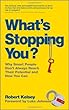
What's stopping you? Book review


What's Stopping You?: Why Smart People Don't Always Reach Their Potential and How You Can.
by Luke Johnson
Edition: Paperback
Price: £5.49
Availability: In stock

3 of 4 people found the following review helpful:
5.0 out of 5 stars Very helpful and a unique perspective9 May 2011

This book is a great read. I chose it because I feel there are times when I seem to be a bit stuck on moving forward on certain projects. So the title intrigued me. I agree with the author that some self-help books appear to be asking you to morph into a hyper, upbeat eternal optimist. One that has the machine gun like ability to clear off everything on a to do list, every day. Some of us mere mortals might never reach those dizzy heights, assuming we wanted too.

This book is more about being realistic about what you can achieve. He points out clever ways to take failure away from being personal. One of the tips I liked was treating your goal objectives as a corporation. Me inc. So failures happen from time to time. Its the task that failed not you as a miserable wannabe.

There is a very clear picture drawn of high level fear of failure types. They can be drawn to almost impossible goals. That way if they fail its viewed as a good effort. Or they shoot really low so they won't fail. I guess we need these people to at least attempt the seemingly impossible goals so we move forward in our evolution. People in out-of-reach careers can sometimes still have a high fear of failure and regard themselves as one breath away from it crashing down. He cites that certain celebrities can fall into this category. It goes some way to explain how they can go off the rails.

I have always enjoyed using a diary to track my thoughts, write out ideas. I find it has allowed me to de-mystify emotions and feelings, ideas, shortcomings, all sorts of things. So when the author expanded on the use of CBT it had a ring of confirmation for me. Although I have recently being putting my thoughts down in online documents using a PC or 5" Tablet, I went back to old school and bought a Black and Red hardback A5 diary. Its been great to use the pen again.

Some books just invite you in to read more. This is one of those books. I love the layout of the chapters and the sub-headings. Its a great font used as well. The chapters are concise and stay on topic.

The author has put himself in the category of a hff. He describes the books he's read, some unrealistic, others very helpful. He lays out the techniques he's found really useful.

He's added some business techniques as well. Like strategies and tactics, appropriate goal setting, processing the work, ideas, being an entrepreneur, expanding on ME inc.

I feel this book rises above a lot of self-help books out there and adds a fresh perspective on the mastering yourself category.

A great book to own and understand about the science of happiness, and the importance of challenges is Flow: The Psychology of Happiness: The Classic Work on How to Achieve Happiness

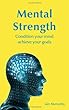
Mental Strength book review


Mental Strength: Condition Your Mind Achieve Your Goals
by Iain Abernethy
Edition: Paperback
Price: £6.49
Availability: In stock

5.0 out of 5 stars Unlock the mystery of you Inner emotional fear factors20 July 2011


If you've ever felt 'stuck' even though you really want to power into your newly defined goals, then by understanding 'fully' what is meant by mental resistance, might help you gain momentum.

Iain explains mental strength as the ability to make things happen.

Mental Resistance are the forces that slow you down, make you freeze, run a mile, or exert a tremendous force. He mentions his 3 'f's Flight, Fight, or Freeze. Each one serves a purpose and most definitely served a purpose with Ancient Man.

A physical force can make you stronger. Weight-training is one of the best analogies to explain this. A weight is lifted for a maximum of 10 lifts. Eventually more lifts can be achieved as the muscles adapt. At a given point its worth increasing the weight to bring it back down to 8 lifts, depending on the end goal. In this case increased strength is the goal.

The feeling of apprehension, procrastination, fear, fogginess, etc, summed up as an internal resistance to a given project or task, is our mental resistance.

Iain suggests that we can read these feelings and determine whether there is the correct amount of 'mental resistance' to increase our mental strength.

Our ancient system of flight, fight or freeze does not always serve us perfectly in our modern world of interactions and business. Understanding that our emotions have 'over-reacted' to a given goal, helps us re-frame these feelings. We now can realise that these feelings are by and large. over-reactions. We won't be able to remove them but we can begin by not letting them prevent us dealing with our goals and moving forward. In fact we can embrace these feelings and say 'Great! This task is a challenge. My feelings tell me I might struggle with this. If I get through this task I will become mentally stronger as a result.'

For example, lets say you have an interview near London. A place you've never been before. The first drive there is nerve-wrecking because there is a lot at stake. Plus you not even sure you know how to get there, yet alone be on time. But you do get there. You get the job. On the 5th drive up to your new job, the trip up there doesn't even cause a ripple in your belly because you've learnt the trip. You have gained mental strength from this experience. The job itself challenges you. Will you make the 3 month probationary period? Eventually you get past the 3 months and you are sailing in your job. You have gained mental strength in that job. The skills can be taken elsewhere.

What can happen though is we get a bit comfortable. We become a bit too secure. We eventually lose our edge to dare step up and challenge ourselves to the next step. Our mental strength begins to slide because we've not continued to apply new challenges to get even stronger.

Understanding about 'mental resistance' can help us agree to select new challenges to take us forward. Removing the bogey of stomach churning emotions, we can read ourselves objectively. Like a submarine radar technician. Listening for the pings.

The book reveals how we can select realistic, next step challenges. If its too big we'll fail miserably. If its too easy we haven't really grown stronger, mentally.

Also I found the book enabled me to read my personal situation accurately. Put my next goals up for action. Determine how realistic they are, understand my fears and my procrastination and where that comes from.

I love personal challenges. Improving myself as a business person is a challenge I've given myself in my forties. Mental challenges don't need the physical peak of Usain Bolt. In the second half of your life use your maturity to make your own success. There are no age limits to mental strength.

I work best with Logic. This book to me is logical. I've not been moving forward lately because I've had no understanding of the 'over-reaction' of my uncomfortable feelings. By re-framing those feelings to 'signals' that I've chosen a worthy goal because its made my belly sing with apprehension, removes the survival decisions and can make logical, calculated ones instead.

I also identified with Iain as I have also gained insight from being a Teacher of Tai Chi.

Producer of Beginner Tai Chi [DVD]